


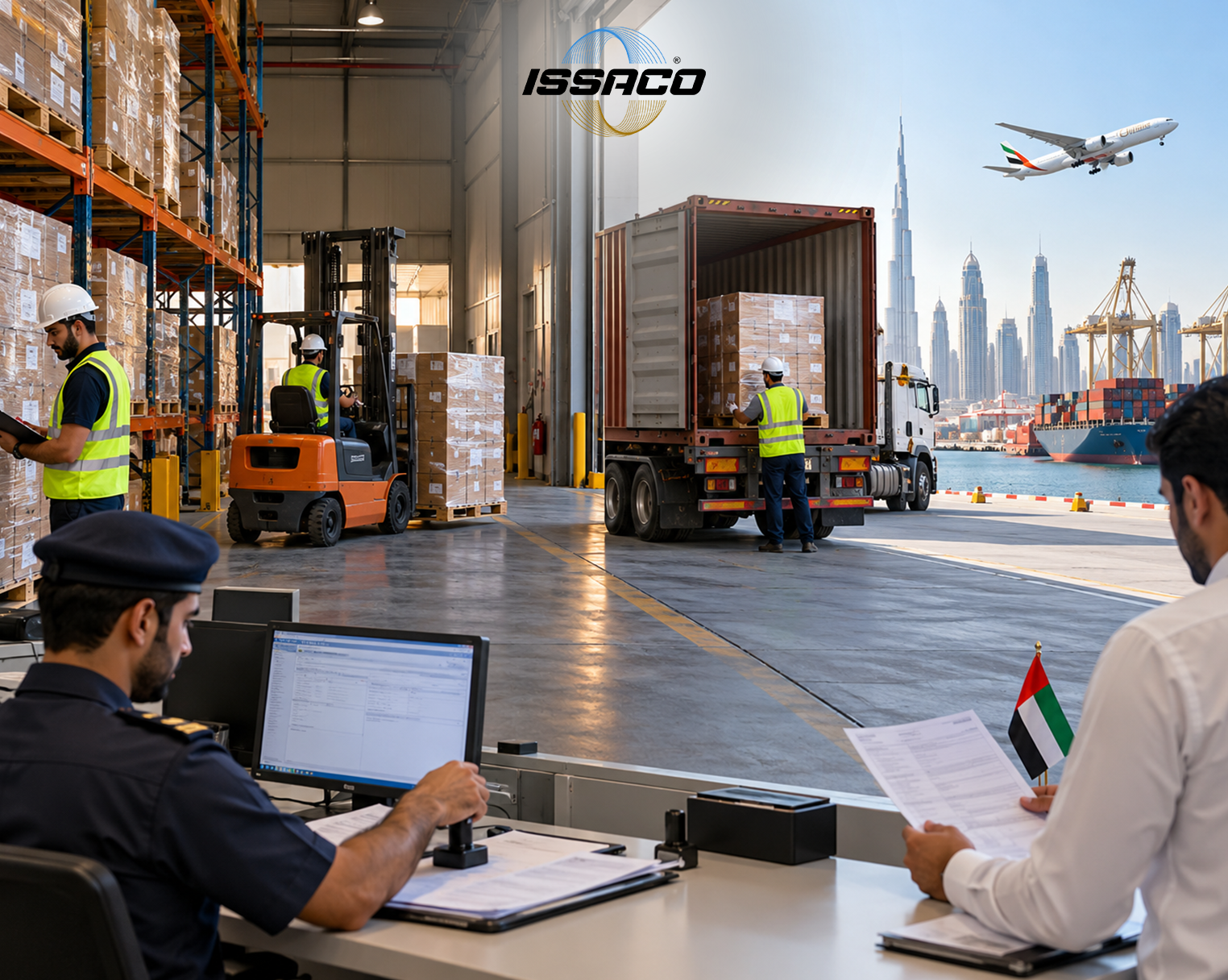
Dubai serves as a major gateway for goods moving across global markets. Its ports, airports, free zones, along with road networks support effective regional distribution. Businesses can store imported goods in approved facilities. Before sending them to their final destination.
Understanding the re-export process in Dubai for businesses helps them to avoid customs delays, together with documentation issues and unexpected costs. A reliable warehousing service in Dubai can support storage, inventory handling, cargo preparation, as well as onward transportation throughout this process.
What Is Re-export from a UAE Warehouse?
Re-export means shipping goods out of the UAE after they enter the UAE without being released for local consumption. Depending on the customs procedure. Eligible goods can remain under customs control before being shipped to another country.
Customs warehouses allow goods to stay under customs supervision. This is without immediate customs duty payment during the applicable warehouse procedure. This arrangement can benefit importers, distributors and international traders holding goods for future export.
Why Dubai Is Important for Re-export
Dubai connects major markets across the Middle East, Asia, Africa and Europe. Its logistics infrastructure supports businesses that need to store, consolidate as well as redistribute international cargo.
Free zones, along with other customs warehouses, are particularly useful for international traders. Dubai Customs also provides mechanisms supporting re-export through approved customs procedures and exit routes.
Warehousing can therefore support more than temporary storage. Businesses can organize inventory, prepare shipments and coordinate onward transportation from a central logistics location.
How the Re-export Process Works in Dubai
The re-export process Dubai businesses follow varies according to cargo, customs procedure and exit route. However, most shipments involve these key stages.
1. Goods Enter the UAE
The shipment enters through an approved customs channel. The importer provides the required declaration and supporting documents.
2. Customs Declaration Is Submitted
Goods are declared under the applicable customs procedure. For eligible import-for-re-export shipments, duty may be secured through a deposit or guarantee.
3. Cargo Moves to the Warehouse
The shipment moves to the designated customs warehouse or approved storage facility. Cargo details should match the relevant customs records.
4. Cargo Is Inspected and Recorded
Customs may inspect the shipment according to applicable procedures. Cargo quantities and details are checked against the declaration.
5. Goods Remain in Storage
The cargo remains stored until the re-export shipment is ready. Inventory can be tracked while orders and transportation are arranged.
6. Re-export Documents Are Prepared
The required re-export declaration and transport documents are prepared according to the shipment’s exit route.
7. Customs Approval and Exit
The cargo undergoes the required customs checks. Once approved, it moves through the designated exit point.
8. Proof of Export Is Completed
Proof of export may be required for releasing a customs deposit or guarantee. Dubai Customs specifies different proof requirements for land, sea and air shipments.
What Documents Are Required for Re-export?
Accurate documents help ensure the customs declaration matches the shipment. Common documents include:
- Commercial invoice
- Packing list
- Certificate of origin
- Re-export customs declaration
- Bill of lading
- Air waybill
- Exit documentation
- Required permits for regulated cargo
Dubai Customs identifies specific proof-of-export documents for different transport routes. Requirements can vary according to cargo type, customs procedure and destination.
Are Duties Exempted When Goods Are Re-exported?
The term duty exemption is often used when discussing UAE re-export. However, businesses should distinguish between duty exemption and duty suspension.
Under eligible import-for-re-export arrangements, customs duty may be secured through a deposit or bank guarantee. When goods are properly re-exported under the applicable procedure, the deposit or guarantee may be released according to customs requirements.
Goods stored in licensed customs warehouses can also remain under customs supervision without immediate customs duty payment during the applicable warehouse procedure.
However, re-export does not automatically make every shipment duty-free. Treatment depends on the customs regime, declaration type, storage location and whether goods enter UAE domestic circulation.
Businesses should confirm the applicable customs procedure before shipping. Correct documentation is also important when claiming eligible refunds or releasing guarantees.
How Long Does Re-exporting Take in Dubai?
Re-exporting timelines depend on documentation, customs processing, inspection requirements, cargo type and transport arrangements. There is no single timeframe for every shipment.
Complete documents can help reduce avoidable processing delays. Restricted products may require additional approvals before they can leave the UAE.
For qualifying import-for-re-export declarations, Dubai Customs provides a six-month period for re-export under the relevant procedure. Conditions must be met for the applicable customs deposit or guarantee to be released.
This permitted holding period should not be confused with the actual time needed to process and ship cargo.
What Can Delay a Re-export Shipment?
Several issues can affect re-export processing. Common examples include:
- Incorrect customs documentation
- Missing invoices or packing details
- Incorrect cargo quantities
- Customs inspection
- Required regulatory approvals
- Delayed exit documentation
- Transport scheduling issues
Regulated cargo can require additional approvals before shipment. Delays may also occur when submitted documents do not accurately reflect the physical cargo.
How Does Warehousing Support Re-export?
A suitable warehouse helps manage the period between cargo arrival and final shipment. Goods can be received, inspected, stored and tracked before the re-export order is ready.
Warehouse operations can also include pick, pack, labelling, consolidation, cross docking and container stuffing. These services reduce the need to move cargo between multiple facilities.
Bonded or free-zone storage can further support international traders managing goods before onward shipment. Inventory remains organized while transportation and customs requirements are coordinated.
An experienced warehousing service in Dubai can connect storage with air, sea and land freight. This creates a more coordinated process from warehouse receipt through final dispatch.
Re-export Warehousing for Different Cargo Types
The demands for warehousing vary depending on the nature of goods being held. Typical classes of goods include FMCG, electronics, pharmaceuticals, automobile spare parts and industrial machinery.
Refrigerated facilities can support products requiring specific storage conditions. Bulk or open-yard facilities can accommodate larger cargo where suitable handling arrangements are available.
Competitors including Blue Bell Shipping and Transworld highlight ambient, bonded, cold chain, bulk and specialized cargo storage.
Why Choose ISSACO for Re-export Warehousing in Dubai?
ISSACO combines warehousing with broader freight and logistics support for international cargo. With more than 35 years of experience, our services cover storage, inventory handling, cargo movement and distribution.
Our warehousing solutions support bonded storage, inventory management, cargo handling, order fulfilment and cross-docking based on business requirements. Air, sea and land freight can also be coordinated with warehouse operations.
This integrated approach helps businesses manage goods from arrival through storage to onward shipment. It also supports companies using Dubai as a regional distribution base.
Final Thoughts
Re-exporting goods from a UAE warehouse requires careful planning at every stage. Accurate documentation, alongside proper customs procedures and timely coordination. All of it can help you avoid unnecessary delays. The right storage setup also keeps goods organized. While they await onward shipment. With reliable logistics planning, businesses can move cargo through Dubai more smoothly and manage costs together with compliance requirements.
FAQs
What is the re-export process in Dubai?
It generally involves customs declaration, approved storage, document preparation, customs processing and proof of export.
Are duties exempted on re-exported goods?
Eligible shipments may have duty secured through a deposit or guarantee instead of normal import duty payment. Treatment depends on the customs procedure.
How long can goods remain under import-for-re-export?
Qualifying import-for-re-export declarations generally provide a six-month re-export period under the applicable procedure.
What documents are needed for re-export?
Common documents include the commercial invoice, packing list, customs declaration and relevant transport documents.
Can goods be stored in a bonded warehouse?
Yes. Eligible goods can remain under customs supervision in a licensed customs warehouse.