


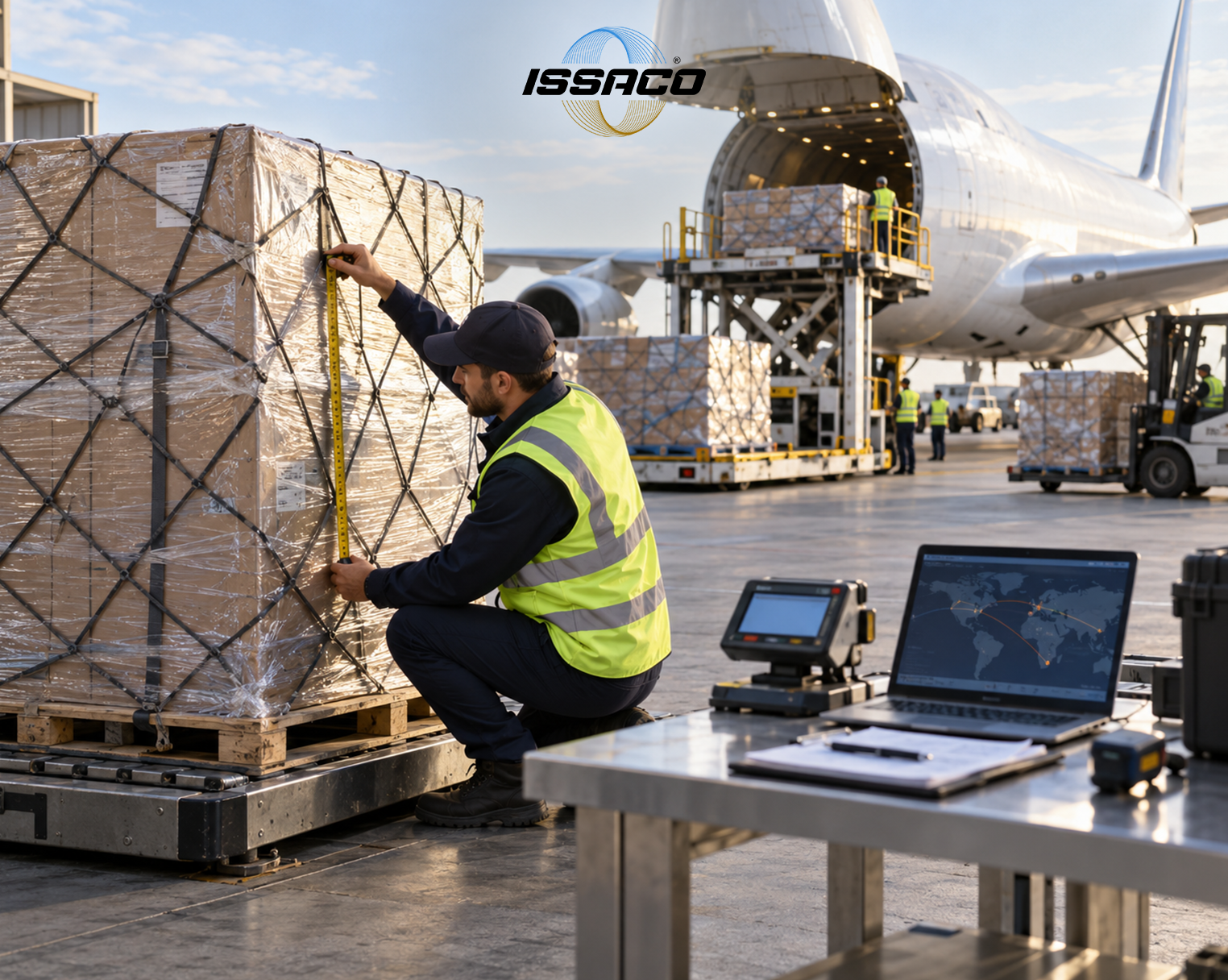
Air freight is mostly priced according to the weight of the shipment. But weight alone does not determine the final air freight bill. The space occupied by cargo can also affect the amount charged. This is why two shipments with identical weights can have different air freight costs. Airlines plus freight forwarders usually compare actual weight with volumetric weight.
The higher figure becomes the shipment’s chargeable weight. IATA provides a standard basis for volumetric calculations using shipment dimensions. Specific carriers may apply different rounding or pricing rules. Understanding this calculation makes quotations easier to review. It also helps businesses compare air freight rates before booking.
What Are Air Freight Costs Based On?
Air freight costs depend on different factors that are related to the shipment. The route also plays a major role in the final price.
Common pricing factors include:
- Actual gross shipment weight
- Shipment dimensions and total volume
- Origin as well as destination
- Cargo type
- Available airline capacity
- Service level combined with routing
- Fuel along with security surcharges
- Airport or terminal handling
- Customs clearance requirements
- Pickup or delivery services
The freight rate is mostly quoted per kg. Though the applicable weight may be actual as well as volumetric.
For this reason, checking air freight costs per kg alone may not show the full shipping expense.
What Is Chargeable Weight in Air Freight?
Chargeable weight is the figure used for the main air freight charge. It is normally the higher value between actual weight plus volumetric weight.
Chargeable Weight = Higher of Actual Weight OR Volumetric Weight
Just take an example of a shipment with these below measurements:
- Actual weight: 85 kg
- Volumetric weight: 115 kg
The chargeable weight would be 115 kg.
If the actual weight were 140 kg instead. The chargeable weight would become 140 kg. This formula takes cargo weight and the aircraft space it occupies.
How Is Volumetric Weight Calculated?
It is the equivalent shipment weight of the volumetric weight. It is commonly used for lightweight cargo. It occupies more space.
The formula is listed below:
Volumetric Weight (kg) = Length (cm) × Width (cm) × Height (cm) ÷ 6,000
IATA air cargo guidance uses the 6,000 cm³/kg basis for air freight calculations. Its guidance also notes that shipment dimensions may be rounded under applicable rules.
Consider one carton measuring:
- Length: 130 cm
- Width: 85 cm
- Height: 77 cm
The calculation is:
130 × 85 × 77 ÷ 6,000 = 141.8 kg
Suppose the carton weighs 90 kg on a scale. Its volumetric weight is higher.
Therefore:
Actual weight = 90 kg
Volumetric weight = 141.8 kg
Chargeable weight = 141.8 kg
Carrier rules can vary between airlines or express operators. Some may use different divisors or rounding methods. The applicable calculation should be confirmed before booking.
How Are Air Freight Costs Per Kg Calculated?
Once chargeable weight is established, the basic calculation is simple.
Base Air Freight Cost = Chargeable Weight × Air Freight Rate
For example:
- Chargeable weight: 141.8 kg
- Air freight rate: AED 18 per kg
141.8 × AED 18 = AED 2,552
The AED 2,552 amount represents the base freight charge in this example. It does not necessarily represent the complete shipment cost.
Additional charges can apply based on cargo type, route plus selected services. This difference matters. Particularly when comparing air freight rates from different providers.
What Are Air Cargo Rates and Charges?
Air cargo rates can include several separate charges. The exact combination depends on the shipment as well as the selected service.
Base Air Freight Rate
This is the primary transportation charge. It is applied to the shipment’s chargeable weight.
Fuel Surcharge
Airlines as well as logistics providers may apply a surcharge related to fuel. The amount can differ by carrier, route plus pricing period.
Security Charges
Security screening can create additional shipment charges. Aviation security requirements may also affect applicable fees.
Airport Handling
Cargo may incur handling costs at the origin or destination airport. These charges can cover terminal processing plus cargo handling.
Documentation Charges
Air shipments require shipping documentation. The Air Waybill is one common document used during the shipment process.
Documentation or processing fees may appear separately in quotations.
Customs Clearance
Customs clearance is separate from the basic airline freight charge. Broker or clearance fees may apply based on the shipment along with destination.
Pickup and Delivery
Door to door shipments can include local transportation services. These may cover movement from the shipper to the airport. Also, from the destination airport to the consignee.
Because charges vary, businesses should review the complete quotation. Comparing only the headline kg rate may give an incomplete cost picture.
What Factors Affect Air Freight Rates?
Origin and Destination
The trade lane directly affects pricing. Flight availability, distance and routing, followed by airport capacity, can influence the applicable rate.
Direct services may also have different pricing. Shipments requiring connections can involve additional handling or routing costs.
Cargo Type
General cargo usually follows standard handling procedures. Special cargo may require additional documentation or equipment.
Dangerous goods, perishables, pharmaceuticals and sensitive cargo can have different pricing requirements.
Shipment Size and Weight
Dense cargo may be charged according to actual weight. Lightweight bulky cargo can instead be charged according to volumetric weight.
Accurate measurements therefore matter when requesting a quotation.
Service Level
Air freight can be arranged under different service levels. Standard and priority services may carry different rates.
Express services can also cost more based on delivery speed, along with routing and handling requirements.
Market Demand and Capacity
Air freight rates can change when aircraft capacity becomes limited. Seasonal demand, route conditions and carrier capacity can all affect quoted prices.
A rate available for one booking may therefore change for another shipment.
Example of an Air Freight Cost Calculation
Consider a shipment moving from Dubai to an international destination.
| Cost Factor | Example |
| Number of cartons | 1 |
| Actual weight | 90 kg |
| Dimensions | 120 × 80 × 70 cm |
| Volumetric weight | 112 kg |
| Chargeable weight | 112 kg |
| Air freight rate | AED 18/kg |
| Base freight | AED 2,016 |
| Other applicable charges | Quoted separately |
| Final shipment cost | Base freight + applicable charges |
The volumetric weight is calculated as:
120 × 80 × 70 ÷ 6,000 = 112 kg
Since 112 kg exceeds the actual 90 kg, the shipment is rated at 112 kg.
If the quotation includes fuel, security, handling, along with documentation or other applicable charges. Those amounts are added to the base freight.
This example shows why air freight costs per kg should be reviewed alongside chargeable weight plus additional charges.
Why Can Air Freight Costs Per Kg Change?
Different factors can change the costs of the shipment. Rates may vary because of:Rates may vary because of:
- Origin and destination
- Airline selection
- Flight availability
- Chargeable weight
- Cargo type
- Service level
- Seasonal demand
- Available aircraft capacity
- Fuel-related charges
- Special handling requirements
IATA also notes that air freight pricing considers both weight and volume. It does not follow one flat international rate.
For businesses, this means an older quotation may not match a new shipment. Current route conditions plus shipment details should always be checked.
How Can Businesses Reduce Air Freight Costs?
We have listed below steps that can help you in the reduction of air freight costs.
Use Compact Packaging
Large boxes can increase volumetric weight even when cargo is light. Avoid unnecessary empty space where the cargo can be packed safely.
Measure Every Package
Incorrect dimensions can affect chargeable weight. Measure the length, width along with height before requesting a quotation.
Consolidate Shipments
Compatible shipments can sometimes be combined. This can help businesses use available cargo space more efficiently.
Consolidation may also provide different rate options. The available choice depends on route, together with shipment profile.
Compare Routing Options
Ask whether direct, consolidated or alternative routing options are available. The lowest rate may not always match the shortest transit route.
Choose the Right Service
Urgent shipments may require premium or express handling. Less time-sensitive cargo can sometimes move through standard service options.
Request an Itemized Quote
Ask for the base freight rate together with applicable surcharges and local charges. This makes quotation comparisons easier.
Optimizing Your Shipping Costs Through Proper Calculation
Businesses arranging international shipments can work with an air freight company in Dubai to calculate chargeable weight before booking.
A freight provider can review:
- Cargo dimensions
- Gross shipment weight
- Packaging details
- Origin and destination
- Available airline options
- Applicable freight rates
- Handling requirements
- Documentation
- Pickup or delivery requirements
This review can help identify whether actual or volumetric weight will determine the freight charge. A freight forwarder can also explain which costs are included in the quotation. This is useful when comparing different air cargo rates as well as service options.
Final Thoughts
Understanding air freight costs starts with chargeable weight. The higher value between actual and volumetric weight normally determines the main freight calculation.
The final amount can include several additional charges. Fuel, security, handling, documentation, alongside customs services and local transportation may affect the total.
Businesses must compare the total quotation as opposed to just considering the air freight per kilogram. Precise measurements together with proper description of the cargo can help make it easy to determine the final quote.
FAQs
How are air freight costs calculated per kg?
Air freight is generally calculated using chargeable weight multiplied by the applicable freight rate. Chargeable weight is usually the higher value between actual plus volumetric weight.
What is the difference between actual weight and chargeable weight?
Actual weight is the physical gross weight of the shipment. Chargeable weight is the figure used for freight pricing after comparing actual weight with volumetric weight.
What is the IATA volumetric weight formula?
A commonly used IATA based metric calculation uses length × width × height in centimetres. Divided by 6,000. Carrier-specific rules should still be confirmed before booking.
Why is volumetric weight higher than actual weight?
Volumetric weight can be higher when cargo occupies considerable aircraft space. This can happen even when its physical weight remains relatively low.
Do air freight rates include customs charges?
Not necessarily. Customs clearance, duties, together with taxes as well as destination-related costs may be separate from the basic air freight rate.
Why do air freight rates change between destinations?
Rates depend on route, airline capacity, cargo type plus service level. Current demand can also affect the quoted price for different destinations.