


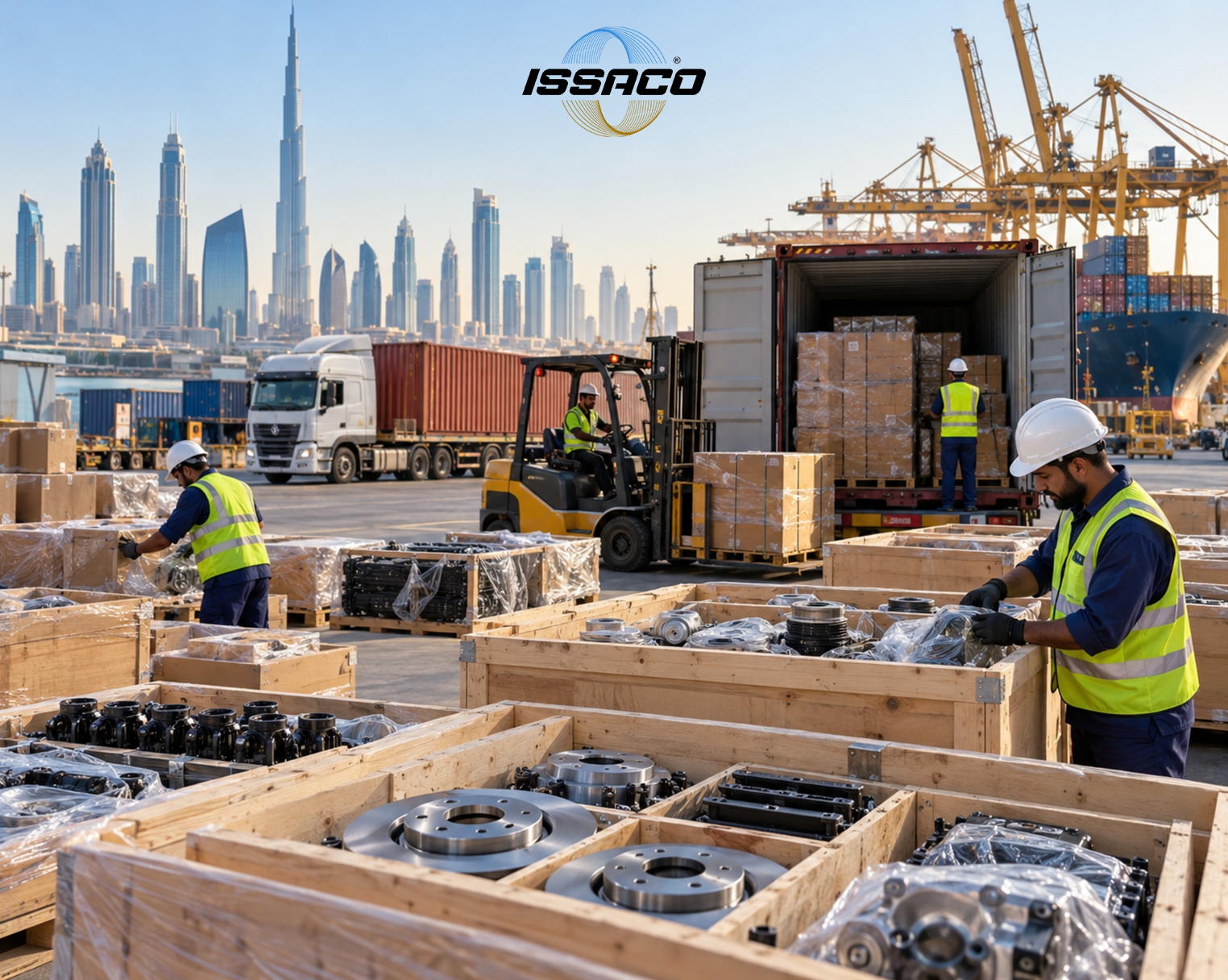
Dubai is an important trading hub for automotive parts, followed by other industrial spare parts. Businesses ship components from the UAE to markets across the Gulf region, Africa, the Middle East as well as other regions.
Spare parts can differ greatly in size, weight plus handling needs. An engine component might need robust packaging. An electrical sensor may need better protection from impact, along with moisture.
The shipping method is also very much dependent on urgency needs and destination, together with shipment size. Complete and proper documentation is also really important for smooth customs clearance. This blog explains the main steps involved in spare parts shipping from Dubai. It covers preparation and packaging, combined with customs clearance plus final delivery.
What Types of Spare Parts Can Be Shipped from Dubai?
Dubai’s spare parts trade covers many automotive parts as well as commercial vehicle components.
Commonly shipped parts include:
- Engines as well as their components
- Brake discs and brake pads
- Radiators alongside cooling components
- Tires as well as wheels
- Electrical components
- Headlights/taillights
- Sensors/control units
- Suspension components
- Body together with metal parts
- Gearboxes and transmission components
Both new as well as used parts may be shipped based on destination regulations.
The component’s condition should be stated accurately on commercial documents. Some markets also restrict specific used or refurbished components.
Exporters should check these requirements before arranging shipment.
Why Is Dubai Used for Spare Parts Shipping?
Dubai provides access to established air, sea and road freight networks. This makes the city suitable for distributing spare parts to nearby markets plus international destinations.
The location also connects businesses with markets across the Middle East, Africa, Asia along with Europe.
Businesses can select transportation based on their shipment requirements. Smaller urgent orders may require air freight. Larger consignments can move through sea freight or road transport where suitable.
For spare parts traders, this flexibility makes Dubai a practical starting point for international distribution.
Which Countries Can You Ship Spare Parts From Dubai To?
Spare parts can move from Dubai to various international markets. Common regional destinations include GCC countries such as Saudi Arabia, Oman, Kuwait, Bahrain and Qatar.
African markets can also receive automotive components from the UAE. Other shipments may move to South Asia, Europe or other international destinations.
Destination requirements are not identical everywhere.
Before shipping, exporters should check:
- Import restrictions
- Product standards
- Used-part requirements
- Required certificates
- Customs procedures
- Import duties plus taxes
- Restrictions on hazardous components
Some countries may restrict specific used components. Others may require additional inspections or certification.
Checking these rules before dispatch can help prevent avoidable delays.
What Should You Check Before Shipping Spare Parts?
Start by confirming exactly what is being shipped. Identify the part, its condition, quantity, weight alongside its dimensions. Then confirm whether the destination permits its import.
Special attention may be required for components containing:
- Batteries
- Oils plus other fluids
- Fuel residues
- Pressurised materials
- Airbag systems
- Other regulated substances
Parts containing liquids should be drained where required. Packaging should also prevent leaks during transportation.
In the case of transporting any item by air as dangerous goods, there will be other classifications, packaging, markings and documentation. The dangerous goods regulations by IATA provide industry guidance for preparation and transportation of dangerous goods by air.
What Documents Are Required for Spare Parts Shipping?
Accurate documentation helps customs authorities identify the shipment. It also supports correct valuation besides classification.
Common documents include:
- Commercial invoice
- Packing list
- Certificate of Origin
- Air Waybill or Bill of Lading
- Export declaration
- Import permits where required
- Product certificates where applicable
The commercial invoice should clearly state the part description, quantity, unit value plus total value.
The packing list should provide the number of packages, dimensions as well as shipment weight.
The HS code should also be checked carefully. Different automotive components can have different classifications.
A broad description such as “car parts” may not provide enough information.
Accurate classification helps avoid customs duty disputes. It can also reduce unnecessary clearance delays.
How Should Spare Parts Be Packed for International Shipping?
Spare parts can be heavy, sharp, fragile or sensitive to moisture. Packaging should therefore match the component type.
Heavy Metal Components
Engines, gearboxes, along with other heavy parts may require strong cartons, pallets or wooden crates. The packaging should support the weight during loading and unloading.
Fragile Electrical Parts
Sensors, control units and lighting components need cushioning. This helps reduce impact during handling.
Anti-static or moisture-resistant protection may also suit sensitive electronics.
Parts With Fluids
Components containing oil and other liquids should be drained where required. Suitable liners along with barriers can help prevent leakage.
Sharp Components
Sharp edges should be covered before placing the part inside its outer packaging. This protects the component plus surrounding cargo.
Labelling
Labels should be placed on a flat, visible surface. Weight, orientation, along with handling instructions can be included where relevant.
Strong packaging matters for heavy or palletized shipments. Properly secured cargo is easier to handle. Also, less likely to suffer transit damage.
Which Shipping Method Is Suitable for Spare Parts?
The right shipping method depends on the order priority, alongside shipment size and destination.
Air Freight
Air freight suits urgent spare parts as well as smaller shipments. It can reduce transit time. When a replacement component is needed quickly.
However, air freight pricing depends on chargeable weight as well as shipment dimensions. Regulated components may also need additional handling.
Sea Freight
Sea freight is useful for larger or heavier consignments. It can suit businesses shipping multiple pallets, containers or regular stock orders.
Larger shipments can be consolidated where suitable. This depends on the destination together with cargo requirements.
Road Freight
Road transport can suit GCC destinations. It provides a practical option for moving spare parts between the UAE alongside nearby markets.
The choice should consider delivery time, shipment size, destination requirements plus total logistics cost.
How Does Spare Parts Shipping from Dubai Work?
A typical shipment follows several stages.
1. Confirm the Destination Requirements
Check whether the destination allows the specific spare parts. Confirm restrictions on used, refurbished or regulated components.
2. Identify the Parts
Prepare accurate descriptions, quantities, dimensions, weights, as well as product condition.
3. Classify the Shipment
Determine the correct HS code. Check whether any part falls under special transport requirements.
4. Prepare the Documents
Complete the commercial invoice, packing list, Certificate of Origin and required transport or export documents.
5. Pack the Shipment
Use suitable cartons, pallets or crates based on component size plus weight.
6. Select the Shipping Method
Choose air, sea or road freight based on priority, cargo volume and destination.
7. Complete Export Customs
Submit the required export declaration along with supporting documents before the shipment leaves Dubai.
8. Arrange Transportation
The shipment is handed to the selected carrier or freight service for onward movement.
9. Complete Destination Clearance
The consignee or appointed clearance agent handles the import declaration, duties together with destination requirements.
10. Deliver the Shipment
After customs release, the cargo moves to the final delivery address.
How Are Spare Parts Classified for Customs?
Customs classification identifies goods being imported or exported.
Each spare part should have an appropriate HS code based on its type and characteristics. An engine, brake component, electrical part or tire may have a different classification.
The commercial invoice should match the classification. It should also describe the goods clearly.
For example. Rather than using a broad description such as “automotive components”. The invoice should identify the actual parts being shipped.
Correct classification helps customs determine applicable duties. It can also reduce unnecessary clarification requests.
What Are the Customs Duties and Taxes on Spare Parts?
Duties plus taxes depend on the destination country, HS classification, customs value, as well as applicable trade arrangements.
The final landed cost can include:
- Import duty
- VAT or other local taxes
- Customs clearance fees
- Terminal or handling charges
- Inspection fees where applicable
- Local delivery costs
Businesses should confirm these charges before quoting customers.
The agreed Incoterm can also determine which party handles certain transportation, customs plus tax costs.
What Incoterms Can Be Used for Spare Parts Shipping?
Incoterms define responsibilities between the buyer/seller in international shipments.
Some commonly used terms include:
EXW
The buyer generally takes responsibility from the seller’s location.
FOB
The seller handles required delivery to the agreed port together with loading obligations under the selected term.
CIF
The seller arranges cost, insurance plus freight to the named destination port under applicable rules.
DAP
The seller arranges delivery to the named place. The buyer generally handles import clearance with its related duties.
DDP
The seller takes responsibility for delivery, including import duties plus taxes, subject to agreed terms with local requirements.
The selected Incoterm should be clearly stated in the commercial agreement. This helps both parties understand their responsibilities before shipment movement.
What Special Considerations Apply to Used or Regulated Spare Parts?
Used components may face different import rules compared with new parts.
- Some destinations restrict specific used parts. Others may require additional inspection or certification.
- Exporters should confirm these rules before accepting an order.
- Batteries plus certain electrical components need additional attention during air transport.
- Other components may contain oil, fuel residue or materials affecting their transport classification.
- For air shipments, dangerous goods must be properly classified, packed, marked, labelled plus documented under applicable requirements.
- IATA’s DGR provides specific guidance covering these areas.
It is best to do this prior to booking the transport. This will give the shipping department time to determine whether special handling is needed.
How Can Businesses Avoid Spare Parts Shipping Delays?
Most avoidable shipping issues begin with incomplete information.
Businesses can reduce delays by:
- Checking destination import rules early
- Using accurate product descriptions
- Confirming HS codes
- Preparing complete documents
- Declaring used parts correctly
- Measuring and weighing packages accurately
- Using suitable packaging
- Identifying regulated components
- Confirming the correct Incoterm
- Sharing documents before shipment collection
Customs authorities review shipment paperwork as well as contents against applicable requirements. Clear descriptions with consistent documents can help prevent unnecessary questions during clearance.
Why Work with a Dubai Shipping Expert?
Working with a logistics and shipping company in Dubai can simplify spare parts movement. Support can cover collection through final delivery.
A professional logistics team coordinates your shipment planning, export documentation, customs clearance, along with cargo handling and final delivery. This can be useful for businesses handling different types of spare parts. Heavy components, urgent orders together with regulated items may each need a different shipping approach.
The logistics provider can also review shipment details before booking. This helps identify potential documentation or handling requirements early.
Final Thoughts
Spare parts shipping from Dubai includes many crucial steps. This starts with arranging transportation and businesses also need to check destination rules, classify parts correctly, prepare accurate documents and use suitable packaging.
The shipping method should also align with the order priority, together with its size. Air freight can suit urgent components. Sea and road transport may work better for larger regional shipments.
For businesses handling regular international orders. An experienced logistics team can simplify freight booking, customs coordination as well as final delivery.
With proper preparation, spare parts can move from Dubai to international markets with fewer avoidable customs and handling issues.
FAQs
Can I ship used spare parts from Dubai?
Used spare parts can be shipped to many destinations. Local import restrictions may apply. Some countries require additional inspection or certification for used components.
What documents are needed to export spare parts from Dubai?
Common documents include a commercial invoice, packing list, Certificate of Origin combined with Air Waybill or Bill of Lading. Additional permits may apply based on the part plus destination.
Can spare parts be shipped by air from Dubai?
Yes. Air freight can be used for many spare parts, particularly urgent or smaller shipments. Parts classified as dangerous goods may require additional IATA-compliant procedures.
How are spare parts classified for customs?
Spare parts are classified using the applicable HS code. Classification depends on the specific component, so the actual part should be identified accurately.
Can automotive parts containing batteries or fluids be shipped?
They may be transportable, but batteries, fluids as well as other regulated materials can have specific requirements. Applicable transport rules should be confirmed before booking.
How long does spare parts shipping from Dubai take?
Transit time depends on destination, shipping method, carrier along with customs processing. Air freight generally suits urgent orders. Sea plus road freight can work for larger or regional shipments.