


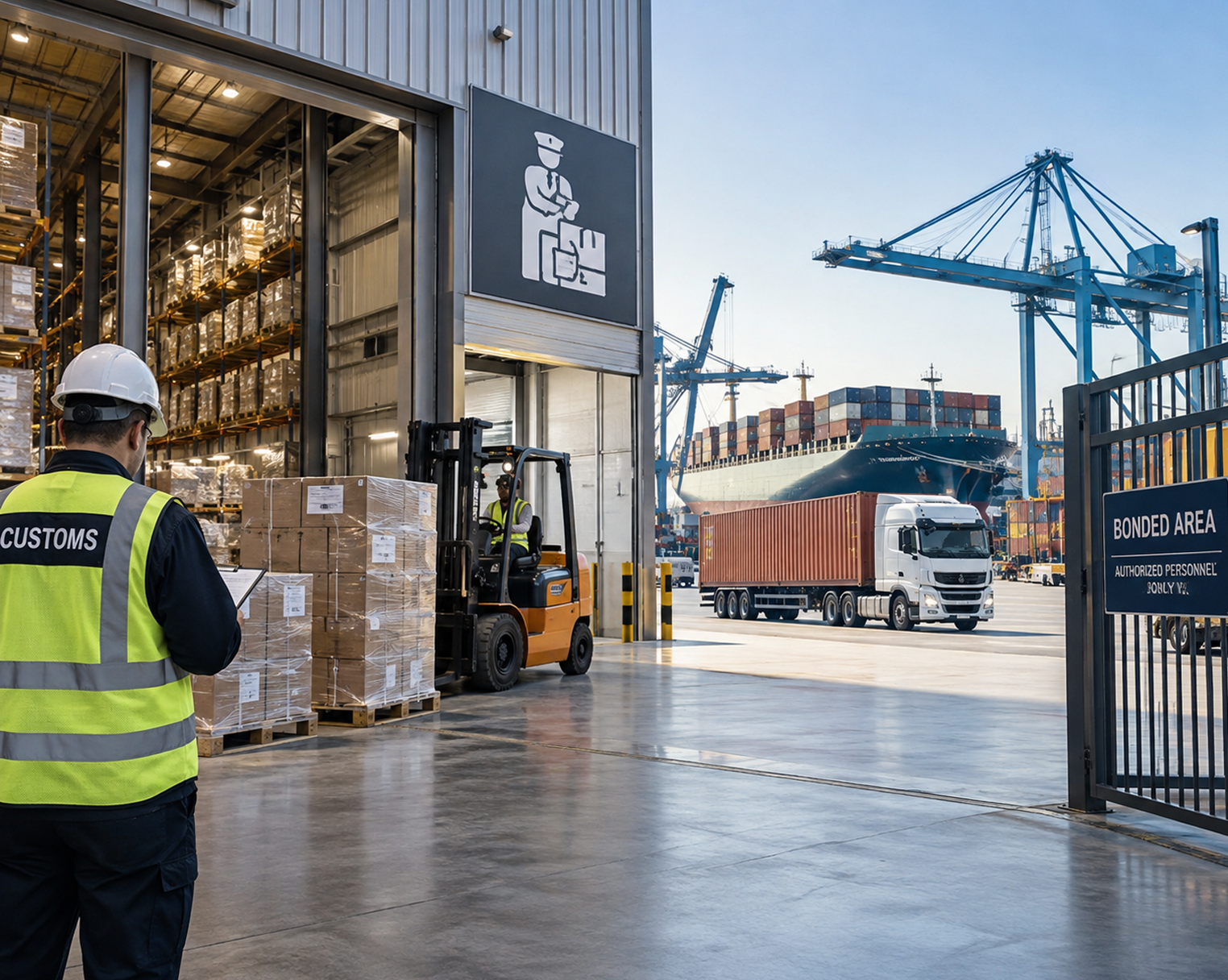
When a large shipment arrives at the port, paying all the customs taxes instantly is not a realistic decision for most of the trading companies. Businesses normally need time to sell their products as well as organize future deliveries. Before they tie up their cash in taxes. Using a bonded warehouse gives importers a very practical way to handle this exact issue without rushing.
The goods remain safely inside the bonded facility under official customs control. You do not have to pay the import duties yet. You only clear the taxes once the stock is actually sold to local buyers, released into the market and shipped out again. This bonded warehousing delay makes a huge difference in managing daily cash flow and keeping the inventory properly organized.
What Is a Bonded Warehouse?
A bonded warehouse is a storage facility for imported goods and is approved by customs. The goods can stay at that facility without immediate payment of customs duties or taxes. Instead of clearing cargo right after arrival, businesses can keep it stored until needed.
While the goods remain inside, customs supervision continues. Duties and taxes are normally paid when the cargo enters the local market. If the goods are re-exported, import duties may not apply in certain cases.
The concept of bonded warehousing is useful for international businesses. It allows companies to manage imported stock without paying duties too early. Payments can instead be planned around actual sales or distribution needs.
For businesses involved in international trade, bonded storage provides useful financial flexibility. It also supports better inventory control while customs requirements are followed.
How Does the Bonded Warehouse System Work?
The bonded warehouse system follows a clear customs process. Imported goods remain secure while duty payments are delayed until release.
Arrival of Imported Goods
Once the cargo reaches a seaport, airport, or land border. Customs authorities check the shipment. Once approved, it can be transferred to a licensed bonded warehouse. The goods do not enter the local market at this stage.
Customs Documentation and Storage
The importer or sometimes the freight forwarder prepares the required shipping documents. These documents are mostly a commercial invoice, Bill of Lading, along with a packing list. Sometimes an Air Waybill is needed in case of air freight, alongside customs declarations
After approval. The goods are moved into the bonded warehouse. The goods remain there under customs supervision throughout the storage period.
Businesses may monitor inventory during this time. Shipments can also be divided or relabelled where regulations allow it. However, all permitted activities must follow local customs requirements.
Professional warehousing and storage services in Dubai help manage these requirements. They also support smoother distribution while keeping customs procedures organized.
Duty Payment or Re-export
When goods are needed for UAE distribution, duties and applicable taxes are calculated. The cargo is then released after the required customs procedures are completed.
For goods intended for another country, direct re-export may be possible. In such cases, UAE import duties may not apply if customs requirements are properly met.
Final Release of Cargo
Once التخليص الجمركي is completed, the cargo can leave the warehouse. After this, it then moves to an importer, distributor, retailer, and final customer.
If the goods are meant for another market, they proceed through the export process instead.
This structured bonded warehouse system gives businesses better control over imported stock. It also helps keep customs procedures organized during storage.
Why Was the Bonded System Introduced?
International shipments are often imported well before products are sold. Without controlled storage, duties would usually need to be paid after arrival. This can put unnecessary pressure on business cash flow.
The bonded system was introduced to provide more flexibility. Importers can store goods under customs supervision while delaying duty payments. Payment is generally made when the goods are released into the local market.
When goods are re-exported instead, local import duties may not apply. This depends on the relevant customs rules and requirements.
The system is very useful for wholesalers, manufacturers, distributors, and trading companies. These businesses mostly handle large inventory volumes and serve several markets.
By separating cargo arrival from customs payment, the bonded system supports better financial planning. It can also make regional distribution easier to manage.
Key Benefits of Bonded Warehousing
Businesses in different industries use bonded warehousing for several reasons. The main benefits include:
- Deferred payment of customs duties and taxes.
- Better cash flow for import-focused businesses.
- Secure storage under customs supervision.
- Easier management of imported inventory.
- Re-export opportunities without local import duties where applicable.
- Less pressure on warehouse operations during busy seasons.
- Greater flexibility for international distribution and regional trade.
Bonded Warehouse vs Non-Bonded Warehouse
Both facilities provide storage for goods. But their customs treatment differs. The main difference is when customs duties are settled.
A bonded warehouse stores imported goods under customs control. Duties are normally settled when the goods are released. On the contrary, a non-bonded warehouse stores the goods only after customs clearance is entirely completed.
| Bonded Warehouse | Non-Bonded Warehouse |
| Customs duties are paid when goods are released. | Customs duties are paid before storage. |
| Operates under customs supervision. | Works as a regular commercial warehouse. |
| Suitable for imported and re-export cargo. | Mainly used for domestic storage and distribution. |
| Gives more flexibility for international trade. | Better suited to local distribution needs. |
| Helps improve cash flow through deferred duties. | Requires customs payment before storage. |
The right choice depends on your business model. Inventory plans also matter here. The most crucial thing to check is whether these goods are for local distribution and sales or for re-export purposes.
Who Should Use a Bonded Warehouse?
A bonded warehouse is not limited to large multinational companies. Businesses of different sizes can use these facilities. Imported goods can remain under customs control until they are needed locally.
Importers buying products in bulk often use bonded facilities. They can delay customs payments until the inventory is required. Distributors and wholesalers can also keep stock closer to customers. This gives them better control over cash flow.
Manufacturers importing raw materials may use bonded warehouses before production begins. International trading companies can also benefit from this arrangement. Re-export businesses find bonded warehousing particularly useful.
Many shipments leave the UAE without entering the local market. Keeping these goods under customs control can reduce unnecessary duty payments. It can also make regional distribution easier to manage.
Which Goods Can Be Stored in a Bonded Warehouse?
Most of the imported commercial goods can be placed and stored in a bonded warehouse. However, the goods must meet applicable UAE customs requirements. The facility can hold many different product categories before duties become payable.
Common examples include electronics, industrial machinery, automotive spare parts, textiles, medical equipment, consumer goods, construction materials, together with packaged food products. Seasonal inventory can also be stored before peak demand periods.
Some restricted or controlled products have additional requirements. Special approvals may be needed before these goods enter bonded storage. Before shipping, importers should check the specific product rules.
Things to Consider Before Choosing Bonded Storage
Although bonded storage offers useful advantages, several points should be checked first. Choosing the right facility can make customs handling much easier.
First, confirm that the warehouse has the required customs license. It should also be officially approved as a bonded facility. The permitted storage period should be clearly understood before goods arrive.
Businesses should also check documentation requirements and insurance options. Handling procedures can differ depending on the cargo type. These details should be discussed before the storage agreement is finalized.
Warehouse security deserves attention as well. Inventory systems, cargo monitoring, and future distribution access matter too. Re-export requirements should also be understood from the beginning.
An experienced logistics provider can make these steps easier. The right support helps businesses maintain proper customs compliance during storage.
Reliable Warehousing Makes Import Operations More Efficient
Managing imported cargo involves more than arranging storage space. Customs coordination is also required throughout the process. Inventory visibility and secure cargo handling are equally important for businesses.
As an experienced warehouse company in Dubai, ISSACO provides secure storage facilities. Our services also include inventory management, customs support, and integrated logistics solutions. These services support businesses handling local distribution or international trade.
Our warehousing services in Dubai give importers more flexibility. They can manage inventory according to their distribution plans. At the same time, cargo remains properly handled throughout the storage period.
الأفكار النهائية
A bonded warehouse enables importers to have more flexibility and ease of operations over their stored goods. Customs duties can be delayed and postponed until the cargo is released locally. This can support cash flow while making inventory planning easier.
The system also works well for international trade and re-export activities. Understanding bonded warehousing assists businesses and individuals in choosing suitable storage arrangements. It also allows importers to handle and manage customs requirements in a better and more effective way.
الأسئلة الشائعة
1. How long can goods remain in a bonded warehouse?
The storage time depends completely on local customs regulations. In Dubai and the UAE. The relevant customs authority determines the allowed duration. This may also depend on the cargo type plus required approvals.
2. Do I have to pay customs duties before using a bonded warehouse?
No. A key benefit of the bonded warehouse system is delayed customs payment. Duties and taxes are generally paid when goods enter the local market. Cargo that is re-exported may not attract local import duties, subject to customs rules.
3. Can goods be re-exported directly from a bonded warehouse?
Yes. Goods under bonded warehousing can often be re-exported directly. They do not need to enter the domestic market first. However, all applicable customs and export procedures must be completed.
4. What products cannot be stored in a bonded warehouse?
Restricted or prohibited goods may have additional requirements. Hazardous materials can also require special approval. Products needing government permits must receive those approvals first.
5. Is a bonded warehouse suitable only for importers?
No. Importers are common users of the bonded system. Exporters, manufacturers, wholesalers, and distributors can also benefit from it. International trading businesses may use it for their re-export operations.
6. Can I inspect or manage my inventory while it is in bonded storage?
Yes. Businesses can generally monitor inventory during bonded storage. However, access and handling remain subject to customs rules. Warehouse procedures must also be followed during inspections or inventory activities.
7. What is the difference between bonded storage and Free Zone storage?
A bonded warehouse stores imported goods under customs surveillance. Duties are delayed until the goods are released locally. Free Zone storage follows a different regulatory framework based on the relevant Free Zone authority.
8. Who regulates bonded warehouses in the UAE?
Bonded warehouses operate under the relevant UAE customs authorities. They oversee licensing, cargo movement, and customs compliance. The bonded warehouse system must follow the applicable storage and release requirements.