

There is a reason global trade routes bend toward Dubai. Positioned at the crossroads of Europe, Asia, and Africa, the emirate has spent decades building an infrastructure so capable and so deliberately designed for commerce that the title of the region’s leading Dubai logistics hub has never really been in question. What is worth examining in 2026, however, is why that dominance continues to strengthen, and what it means for businesses operating in and through the region today.
A Foundation Built on Strategic Geography
Geography gave Dubai a head start, but infrastructure turned that advantage into an institution. The emirate sits within an eight-hour flight of roughly two-thirds of the world’s population. A fact that shapes everything from aviation policy to warehousing strategy.
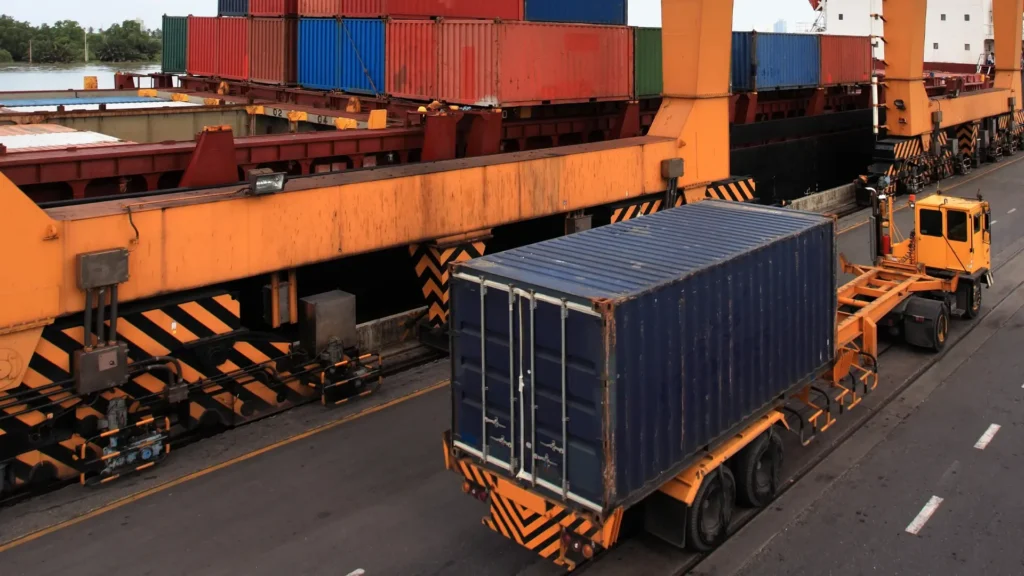
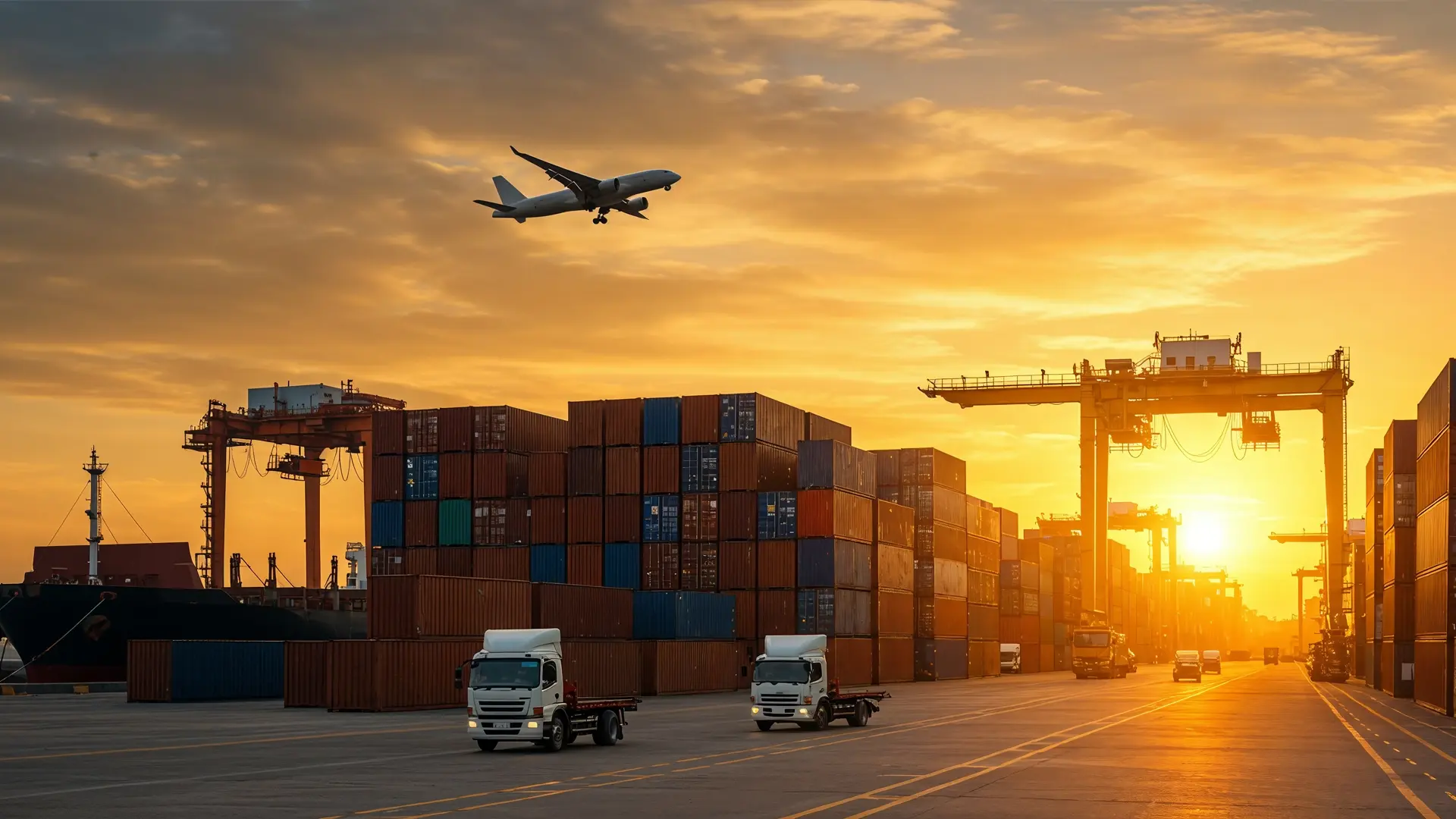
DP World’s Jebel Ali Port is a massive terminal that forms the core of a rare sea-air corridor. Because it connects directly to Al Maktoum International, cargo moves from ship to plane within the same zone. This skips the customs headaches at every turn. This presents why Dubai is seen as an operationally mature player instead of just a map coordinate for logistics.
The city’s road network, including the E11, E611, and E311, ties it all together. These highways form a high-speed grid that links the port and airport to the rest of the GCC with almost zero friction. For any business moving freight across borders, this kind of multimodal flow is not a perk anymore. In Dubai, it is just how things work.
Government Strategy Is Accelerating, Not Slowing
What separates Dubai from other aspirant logistics centres is the consistency of government commitment behind the sector. In 2026, that commitment is not merely continuing; it is intensifying.
Operation 300bn and the D33 Agenda
At the federal level, the UAE’s Operation 300bn programme is actively pushing the industrial and logistics sector to grow the industrial GDP contribution from AED 133 billion to AED 300 billion by 2031. This implies increased industrial belts, simplified foreign investment channels and conscious encouragement of the supply chain infrastructure that supports manufacturing and trade.
The D33 Economic Agenda of Dubai aims at doubling the economy of the emirate by 2033, and logistics and trade are among the pillars. Practically, this is translated into further investment in port capacity, facilitation of digital trade, and expansion of free zones, which are all beneficial to businesses that have this city as a regional base.
A JLL 2026 outlook report notes that the UAE is enhancing its status as a global trade and logistics hub due to unprecedented population growth, increased foreign trade volumes, and increased technological transformation. These are not cyclical trends. They are structural changes that are compounding every year, which strengthen the position of Dubai as the fastest-growing logistics hub in the region.
Dubai vs. Other Regional Hubs: How It Compares
One of the most telling ways to understand Dubai’s dominance is to place it alongside the other cities that aspire to the same title. The gap is real, and it shows across every major dimension of logistics capability
| Factor | دبي | الرياض: | الدوحة: | Istanbul |
| Global port ranking | Top 10 worldwide | Landlocked | Regional | Mid-tier |
| Free zone availability | 40+ zones | Limited | 1 major zone | Limited |
| Sea-air corridor | Yes (JAFZA + DWC) | No | Partial | No |
| Customs digitisation | Advanced | Developing | Moderate | Moderate |
| GCC road connectivity | Full network | Partial | Limited | N/A |
| Foreign ownership | 100% in free zones | Restricted | Restricted | Restricted |
The comparison makes one thing clear: no other city in the immediate region offers the same combination of physical infrastructure, regulatory freedom, and geographic reach that makes Dubai the preferred home for the fastest-growing business hub ecosystem. Competitors offer fragments of this picture. Dubai offers the whole.
Free Zones: The Competitive Engine Within the Hub
No conversation about Dubai’s logistics leadership is complete without addressing its free zone ecosystem. The UAE hosts over 40 free zones, with several specifically designed for trade and logistics operations. Jebel Ali Free Zone (JAFZA) alone is home to more than 9,000 companies from over 100 countries.
Why Businesses Choose Free Zones
The appeal is clear and consistent:
- Duty exemptions: Goods that are stored and re-exported in a free zone are not subject to import and re-export duties, which provide a substantial cost benefit to international trade companies.
- 100% foreign ownership: There is no requirement of a local sponsor, and international companies have complete control of their operations.
- Streamlined customs: On-site customs and digital processing save clearance time by a huge margin.
- Sea-air corridor access: The direct connection between Jebel Ali and Al Maktoum International Airport enables freight to be transferred multimodally within the same zone.
- Proximity to key trade routes: Direct access to major shipping lines to the Middle East, Africa, and South Asia.
- Flexible warehousing: Short and long-term storage in world-class climate-controlled facilities.
For businesses engaged in international trade, a free zone presence in Dubai is often the most efficient way to serve multiple markets from a single base. This is not purely a tax story; it is equally a speed and simplicity story.
Technology Is Redefining What Logistics Excellence Looks Like
In 2026, being a great logistics city is no longer only about physical infrastructure. It is also about the digital systems that sit on top of it. Dubai has moved quickly here.
Dubai’s Digital Trade Infrastructure
The Dubai Trade platform combines customs clearance, shipping documentation, and regulatory compliance into one digital platform. Other investments made by the emirate include blockchain-based trade finance, smart port management systems at Jebel Ali, and drone delivery pilots in select corridors. These initiatives are not experiments as they are becoming standard operational practice.
For businesses, this translates into faster customs clearance, fewer documentation errors, and greater end-to-end visibility across supply chains. The logistics companies thriving in this environment are those that have built their operations around these systems rather than working around them.
The Talent and Network Advantage
Beyond ports, roads, and technology, there is a human dimension to Dubai’s logistics leadership that often goes unacknowledged. The emirate has spent decades attracting logistics professionals, freight forwarders, customs specialists, and supply chain strategists from across the world. The outcome is the concentration of expertise that cannot be easily duplicated.
This concentration of talent is of practical importance. It implies that businesses will be able to locate skilled local partners, trained compliance teams, and commercially savvy operators who are aware of the peculiarities of GCC cross-border trade, documentation needs in various markets, and relations that keep supply chains running in case of disruptions.
It is also why businesses entering the Middle East market consistently choose Dubai as their logistics base rather than operating solely through a remote headquarters. The local knowledge embedded in this city’s professional community is an asset that compounds over time.
What This Means If You Need a Logistics Company in Dubai
The argument in favor of Dubai as the location of the regional supply chain anchor in 2026 is perhaps more compelling than it has ever been. The government investment is growing, infrastructure is growing, the benefits of free zones are very competitive, and digital systems that allow faster and more transparent logistics are maturing at a very high rate.
The practical implication is that the decision to select the appropriate logistics company in Dubai, one that has strong roots in the city’s trade infrastructure, free zone experience, and cross-border strength, will either make or break your business, reap the benefits of these benefits or merely be in the vicinity of them. Having access to the finest infrastructure is of no use without partners who understand how to negotiate it, transport cargo across GCC borders with accuracy, manage customs with confidence, and communicate proactively when plans are altered.
The Hub Is Still Rising
Dubai’s logistics hub proves to be the Middle East’s top logistics hub. It was built with dedication and years of infrastructure investment, regulatory refinement, as well as commercial positioning. In 2026, those foundations are being intensified, not forgiven.
For businesses thinking about their regional supply chain strategy, one conclusion stands clearly: Dubai is not just a useful logistics base. It is the most capable one in the region, and the gap between it and the nearest competitor continues to widen.
الأسئلة الشائعة
1: Why is Dubai considered a logistics hub?
Dubai is a logistics hub due to its strategic location, major ports and airports, and a strong network of free zones connecting global markets.
2: Is Dubai the fastest-growing logistics hub in the region?
Yes, the UAE logistics market is projected to grow 8.41% annually and reach $31.4 billion by 2026, making Dubai the fastest-growing logistics hub in the Middle East.
3: What makes Dubai better than other GCC cities for logistics?
Dubai stands out with a world-class seaport, bonded sea-air corridor, foreign ownership in free zones, digital customs systems, and strong regional connectivity.
4: How does the Dubai Logistics Corridor work?
It links Jebel Ali Port, JAFZA, and Al Maktoum International Airport under one customs-bonded system to enable sea-air cargo transfers in under an hour.
5: Is Dubai’s position as a logistics business hub growing in 2026?
Yes, the expansion of Al Maktoum International Airport into the world’s largest cargo hub is expected to further strengthen Dubai’s logistics leadership.