

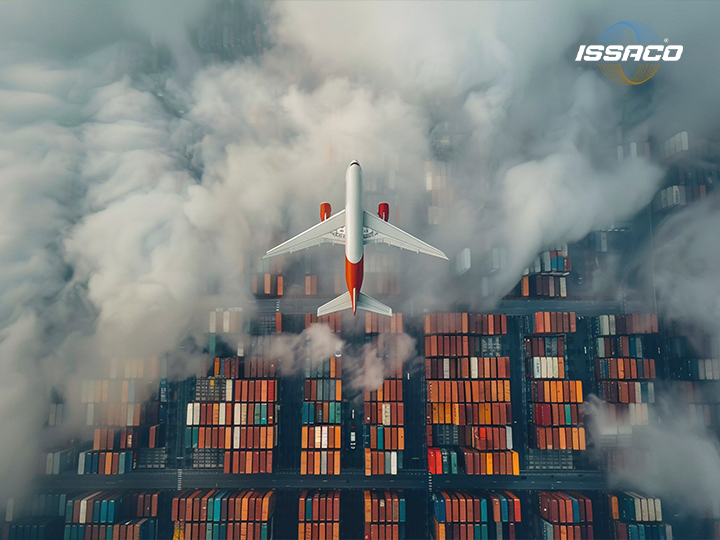
Choosing between air freight vs sea freight is one of the most important decisions any importer, exporter, or e-commerce business will make. Get it right, and you save money, hit deadlines, and keep customers happy. Make the wrong choice, and you end up paying more than was necessary to get your order filled, or languishing in weeks of waiting before your products are delivered.
So which is better?
The truth of the matter: this is a question of what you are shipping, how quickly you need it and how much you can afford. This logistics guide dissects all the major considerations, including cost and transit time, carbon footprint, and risk, to enable you to make a confident and informed decision.
What is Air Freight and Sea Freight?
It is always good to be clear of what each one means before making a comparison between the two.
Air freight is the movement of products by air using an aircraft, either on a cargo-only aircraft or the hold of a passenger aircraft. This is normally applied in shipments that are time sensitive, valuable, and relatively light.
Sea freight (also known as ocean freight) is a form of transport where goods are shipped in containers on cargo ships. It forms the backbone of international trade as it pushes raw materials and machinery, as well as consumer and bulk goods.
Both sea cargo and air cargo have different functions in the global supply chain. Knowing where each of them belongs can save your business a lot of time and money.
Air Freight vs Sea Freight: Key Differences
Before getting to the depths of air freight and sea freight, let’s first take a look at a quick comparison between the two.
| Factor | Air Freight | Sea Freight |
| Speed | 1 to 7 days | 20 to 45 days |
| Cost | Higher | Lower |
| Capacity | Limited | Very large |
| Carbon Footprint | High | Much lower |
| Reliability | Very high | Moderate |
| Best For | High-value, urgent goods | Bulk, non-urgent shipments |
Sea Freight vs Air Freight Cost: What Will You Actually Pay?
The first factor that businesses consider is often cost, and they are right. The cost of air freight vs sea freight can be dramatically different based on the size of shipment, weight, route, and the prevailing market prices.
Air freight may be 4-6 times more expensive than sea freight, as a general rule of thumb. An example is that a shipment of 85 kg could cost approximately $400 when shipped through Less than Container Load (LCL) through the ocean but could skyrocket to 600 or higher when using air. On larger shipments, that gap widens significantly.
However, the sticker price is not the whole story. There are other extra costs that can be easily ignored in sea freight:
Warehousing expenses: Delays in delivery make your products stay in storage longer, and this is costly.
Inventory carrying costs: Tying up capital in transit inventory for 30 to 45 days has a real financial impact.
Port delay charges: Port congestion, customs delays and port strikes may introduce unforeseen expenses.
All of this makes the real cost of air freight vs sea freight closer to a comparison when you consider all of this, particularly when dealing with high-value goods or businesses that have lean inventory models.
(Rule of thumb: When the cost of shipping is more than 15 to 20 percent of the total value of your goods, rethink air freight and consider sea freight as an alternative.)
Transit Time: How Quickly Do You Want Your Goods?
Air freight has an unquestionable advantage in speed. Air deliveries are generally delivered in 1 to 7 days, whereas sea deliveries are normally delivered in 20 to 45 days, depending on the source and destination.
Nonetheless, the divide has been closing. Many routes now have Express LCL (Less than Container Load) ocean services that guarantee delivery windows that can compete with normal air freight delivery times at a fraction of the cost. Such services are efficient when the shelf life of the product is over two weeks and below a month.
Air freight is the obvious solution to businesses that need to replenish their stocks ahead of a seasonal rush, need to react to an unexpected stockout, or have orders that need to be delivered in time. The inability to wait three to six weeks to receive a sea shipment during a sales window that could be critical to most e-commerce brands is not a possibility.
Reliability and Supply Chain Risk
Air freight is highly precise and has set flight schedules that are minimally disrupted. The process of rerouting is not very difficult, and delays, although they can occur, are much less frequent than with ocean shipping.
On the other hand, sea freight is vulnerable to more risks:
- Port congestion and labor strike.
- Unfavorable weather conditions on shipping routes.
- Geopolitical shocks (including Suez Canal blockages)
- Container shortages
These variables are real risks to businesses that have a tight delivery commitment or a just-in-time supply chain. A comparison between air cargo vs sea cargo in the area of reliability is no competition at all; air freight wins by a mile.
What Types of Goods Are Best Suited for Each Mode?
The demands of different goods are different. Here is how each transport mode lines up with the most common cargo types.
Choose air freight for:
- Premium electronics and devices.
- Medical supplies and pharmaceuticals.
- Fresh produce and perishable food items.
- Fast-moving fashion and luxury items.
- Emergency industrial components or equipment.
Choose sea freight for:
- Heavy machinery and oversized equipment.
- Raw materials and bulk commodities.
- Large consumer goods, furniture and homeware.
- Non-urgent retail inventory.
- Products whose cost efficiency is more important than speed.
It is also notable that hazardous materials have more stringent rules regarding air freight. Products such as flammable liquids, some batteries, gases and magnetic materials can be limited or banned on airplanes. Always check with your freight forwarder when booking.
Air Freight vs Sea Freight: Carbon Footprint
Sustainability is no longer just an ethical consideration. It is more of a business one. Clients, investors, and consumers are concerned with the way companies are addressing their environmental impact.
In this aspect, sea freight scores far higher. The amount of CO2 emitted by ocean shipping is a drop in the ocean compared to air freight. A single cargo ship, large as it is, transports a huge amount of goods per kilometer in comparison with an aircraft, and is therefore much more carbon-efficient per unit shipped.
When you have sustainability goals or just wish to minimize your carbon footprint, switching to sea freight wherever possible is a realistic and significant measure.
How to Choose Between Air Freight vs. Sea Freight: A Simple Decision Framework
Before you reserve your next shipment, ask yourself the following questions:
How urgent is the delivery? When customers want quick delivery or you are in a hurry to restock, then use air.
Value of your goods? Air freight is worth the premium of high-value goods.
What is the size or weight of shipment? Heavy and bulk loads are cost-effective on sea.
Are the goods perishable? Perishables nearly always have to be airfreighted.
What are the complete landed costs? Compare by adding warehousing and inventory costs.
Does your business have sustainability commitments? Sea freight is more environmentally friendly.
You need not choose any mode forever. A hybrid model is applied in many profitable companies whereby the urgent or high-value SKUs are delivered by air and the slower-moving stock is delivered by sea.
Final Words!
Choosing between air freight vs sea freight is not a one-size-fits-all decision. It is based on the type of goods you sell, your delivery schedules, your financial budgets, and your business objectives. Both air freight and sea freight are important and useful to global logistics, and the most intelligent shippers understand how to employ both to their advantage.
In case you are located in the UAE and need the assistance of a professional with your shipping strategy, you can cooperate with a reputable logistics firm in Dubai or a trusted logistics company in Dubai, and they will assist you in considering available options and identifying the most efficient and cost-effective path to follow in terms of your particular needs.