

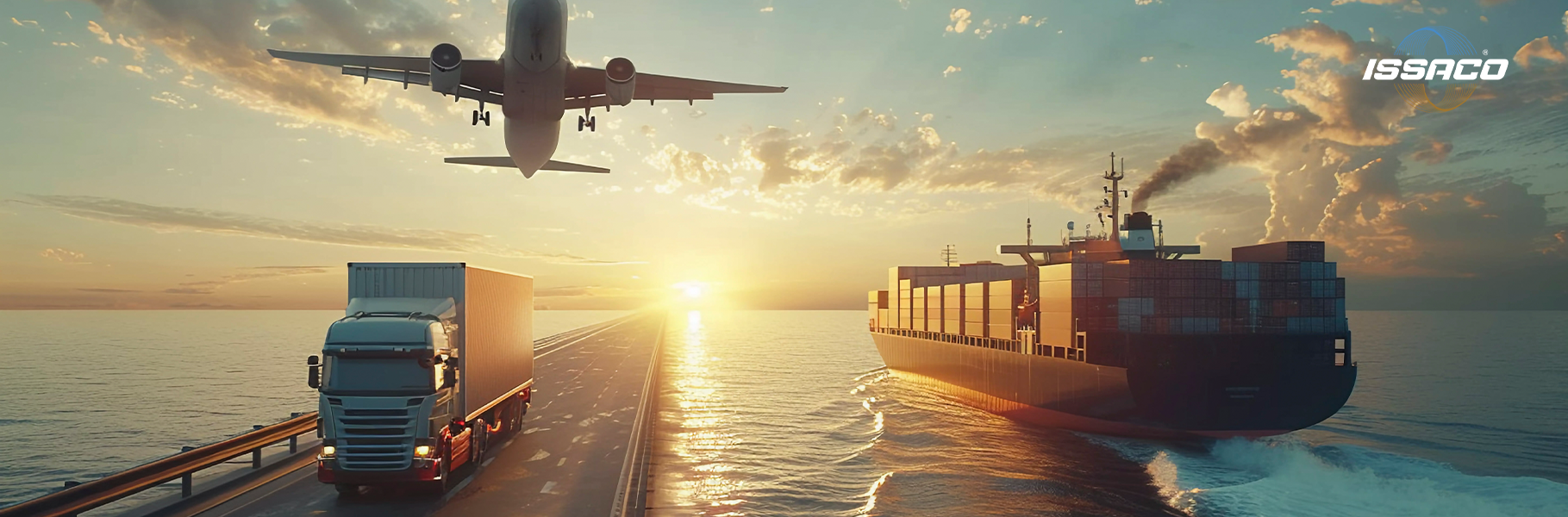
If you’ve ever tried to move cargo from China to Dubai, you already know the first decision is rarely simple.
Do you go by sea and save money?
Book air freight and meet your deadline?
Or is there a middle ground that actually works for your business?
The good news is that the options for shipping from China are more varied than ever, and each one serves a different type of shipper. Whether you’re moving a full container of furniture or a few boxes of electronics, this guide breaks down every major freight mode, compares them side by side, and helps you figure out which one makes the most sense for your cargo, your timeline, and your budget.
Why the Right Shipping Option from China Matters More Than You Think?
Using the incorrect type of freight will not only cost you more money, but it may also hold up stock, cause a customs hold up, ruin your relationship with buyers, and cost you margins you did not intend to lose.
The China-Dubai trade lane is among the busiest in the world. The Jebel Ali Port of Dubai is the biggest container port in the Middle East and also a key entry point of goods into the UAE and the region in general. Companies engaged in shipping between China and Dubai on a regular basis know that a properly selected freight technique can be the key to timely delivery of goods, orders and products that do not leave the terminal due to paperwork.
There are four questions to ask yourself before deciding on a freight mode:
Is the cargo heavy or bulky?
How fast is it required?
What is the budget ceiling?
Are there any special handling requirements such as temperature control or hazardous classification?
Your responses will guide you towards the correct choice.
Your answers will point you directly to the right option.
All Major Options for Shipping from China: Explained
No matter whether you are a first-time importer or an experienced buyer, you can save a lot of time and money by learning more about your shipping options in China.
1. Sea Freight (FCL and LCL)
China-Dubai trade is based on sea freight, and it is not without reason. It is the cheapest method of transporting bulk or heavy consignments and ships from the big Chinese ports such as Shanghai, Shenzhen, Ningbo, and Guangzhou arrive at Jebel Ali Port on a regular basis.
It has two formats to know. Full Container Load (FCL) involves you hiring a full-size container, a 20-foot or a 40-foot container. This is most effective when your cargo occupies at least 60-70 percent of a container. You have exclusivity, reduced chances of damage, and a predictable rate. Less than Container Load (LCL) will enable you to share the container space with other shippers and only pay a per-volume rate. This is perfect when dealing with smaller consignments that do not warrant a complete box.
Sea transit time averages 18-28 days, depending on the port of origin, carrier and routing. Although it is the slowest of all the freight modes, the cost savings of high-volume goods are difficult to contend with. A 20-foot container between Shenzhen and Jebel Ali can be as cheap as 700-2250 US dollars, depending on the season and market conditions, making it by far the most cost-effective mode of bulk cargo.
2. Air Freight
Airfreight comes in when time is of importance. Products exported by Shanghai Pudong, Shenzhen Baoan or Guangzhou Baiyun can arrive at Dubai International Airport (DXB) or Al Maktoum International Airport (DWC) in 3 to 7 days, including clearance and handling of the products.
Products with high value such as electronics, medical equipment, fashion, jewellery etc are also best suited to air freight where the product price is high enough to justify the higher freight expense. The practical option also applies when you are making stock up and it is an immediate requirement, or when you have a sudden surge of demand. Both Emirates SkyCargo and Etihad Cargo have robust dual-hub networks between China and the UAE, and cargo flights on major routes are found on a daily basis.
The trade-off is simple: you pay significantly more per kilogram than sea freight. Air freight is usually charged by actual weight or volumetric weight, which is greater; thus, always calculate both to book.
3. Express Courier (Overnight and Fast Options)
For businesses that need the absolute fastest delivery, the overnight options for shipping from China come from major international couriers such as DHL, FedEx, and UPS.
These services offer door-to-door delivery in as little as 1 to 4 business days from most major Chinese cities to Dubai. They do the customs clearance on your behalf, offer real-time tracking and are best suited in case of samples, documents, launching small products and also in cases of replacements that are urgent.
It is the most expensive mode of freight per kilogram. Express is best suited in cases where the weight of the shipments is low (generally less than 50 to 70 kilograms) and where the speed of delivery is actually worth the charge. Other heavier or less urgent items will be better served by regular air freight or sea freight.
Quick Comparison: Which Shipping Option Is Right for You?
Not sure where to start? Here’s a quick snapshot to help you match your cargo with the right shipping method.
| Freight Mode | Transit Time | Relative Cost | Best For |
| Sea Freight (FCL) | 18-28 days | Low | Large, heavy, non-urgent shipments |
| Sea Freight (LCL) | 20-35 days | Low-Medium | Smaller loads, budget-conscious shippers |
| Air Freight | 3-7 days | High | Time-sensitive, high-value, lightweight cargo |
| Express Courier | 1-4 days | Very High | Samples, documents, urgent small parcels |
When you are cost-conscious, then sea freight is nearly always the solution. In case speed is the priority, express courier or air freight will be more suitable.
Key Factors to Consider Before Choosing Your Freight Option
Before you commit to a shipping method, these are the variables that will shape your decision.
Nature of the cargo: Certain goods come with restrictions. Hazardous materials, lithium batteries, perishables and oversized items all have specific carrier requirements and documentation requirements. Always verify the classification prior to booking.
Budget vs. deadline: This is the key tradeoff in freight. Have a defined limit on the amount you can spend and delivery date prior to approaching a forwarder so that you can objectively compare the options.
Customs and paperwork: UAE imports must be accompanied by a commercial invoice, packing list, certificate of origin, and the appropriate HS code. Most goods are subject to a 5% customs duty calculated on the CIF value, plus 5% VAT. One of the most prevalent causes of clearance delays at Jebel Ali is related to errors in documentation.
Cargo insurance: Cargo insurance is not an option in high-value shipments. Determine whether your forwarder covers or if you have to cover it independently.
Seasonal surcharges: Chinese New Year, Golden Week, and the pre-Christmas Q4 peak all cause capacity pressure, driving freight rates higher. It is possible to save quite a considerable sum of money by planning around these periods.
Selecting a freight forwarder: Find a company that has an existing carrier relationship along the China-UAE route, has strong experience with UAE customs processes, and has a history of effective communication. A good forwarder will recommend the appropriate mode to use on each delivery instead of adopting the most convenient mode for them.
Summary!
There is no single answer that works for every shipper. The right choice depends entirely on what you are moving, when it needs to arrive, and what you can afford to spend getting it there.
For high-volume, non-urgent cargo, sea freight remains the most practical and cost-effective route. For time-critical goods, air freight and express courier are worth every extra dirham. Multimodal solutions offer a balanced middle path for businesses that ship regularly and need inland distribution beyond the port.
The clearer you are about your priorities, the easier it becomes to match them to the right freight mode. Take time to evaluate all the best options for shipping from China before committing to any single method. A qualified freight forwarder with verified experience in shipping from China to Dubai can help you make that decision with confidence and ensure your cargo arrives without unnecessary delays or surprises.
FAQs
1. What are the main options for shipping from China to Dubai?
The main options for shipping from China include sea freight, air freight, express courier, and multimodal, each suiting a different budget and timeline.
2. What are the overnight options for shipping from China to Dubai?
The best overnight options for shipping from China are DHL, FedEx, and UPS, delivering door-to-door in just 1 to 4 business days.
3. What are the best options for shipping from China for budget-conscious importers?
For tight budgets, the best options for shipping from China are FCL or LCL sea freight, costing as little as $700 per container.
4. What documents do I need for shipping from China to Dubai?
Shipping from China to Dubai requires a commercial invoice, packing list, certificate of origin, correct HS code, and awareness of the 5% customs duty.
5. How do I choose between the different options for shipping from China?
Evaluate your cargo size, deadline, and budget. A forwarder experienced in shipping from China to Dubai can match you to the right freight mode.